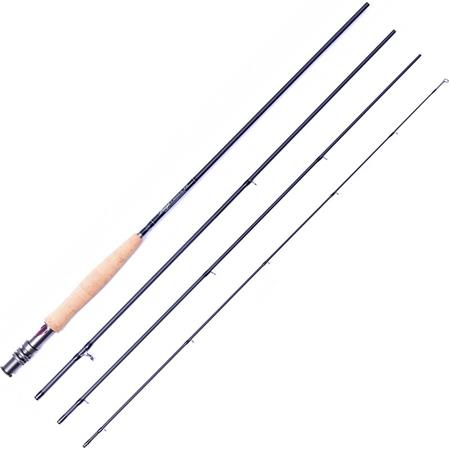

Models & specificitiesDescriptiveReviewsA questionBesoin de formation
Models & specificities
Back to menu
Reference
Price inc VAT
Sections
Fly fish. line
Rings number
Transport length (cm)
Length (cm)
Weight (g)
Length (feet)
Handle length (cm)
Price inc VAT
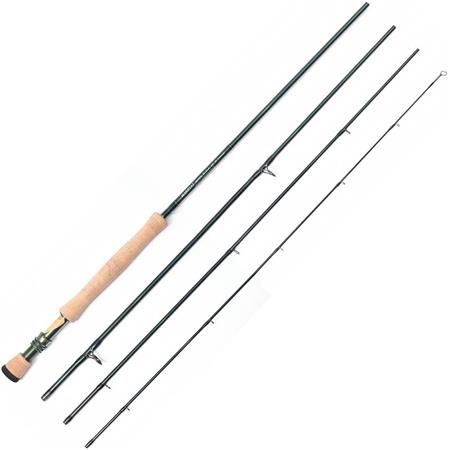
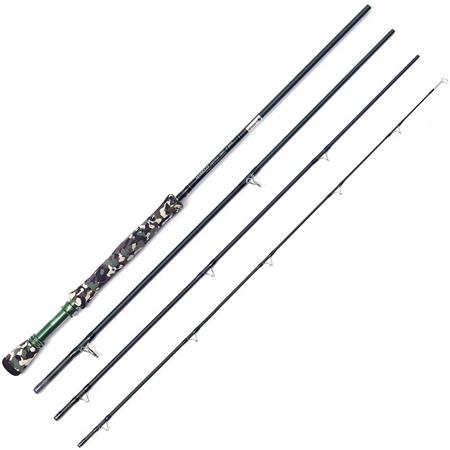
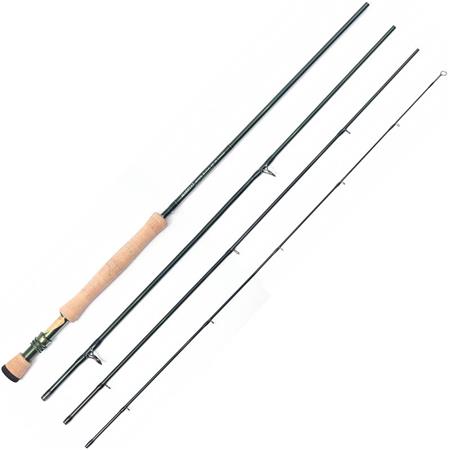
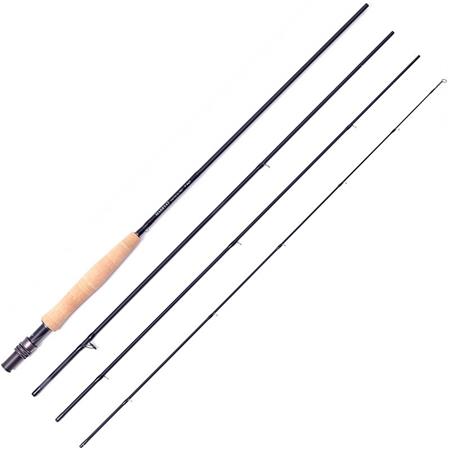
TACBO8S
£387
4
#8
11
77
292
117
9.6
33
£387
Models & specificitiesDescriptiveReviewsA questionBesoin de formation
Descriptive
Back to menu
Fishing on lakes or reservoirs requires the use of different types of fly lines, floating, intermediate or extra-sinking. Over the years, I have met many anglers who had to face the same problem: the effectiveness of the cast between the floating line and the sinking line…
First of all; a brief technical reminder is in order: Each fly line corresponds to a weight that determines its number. The only drawback is that this weight is calculated over 30 feet (a little over 9 meters). For example, a 7-weight line must weigh 12g, an 8-weight line must weigh 13.5g. Yes indeed! Only 1.5g separates them. When we design a rod, we use a tolerance range as reference, which in the example of a 7-weight line oscillates between 11.5g and 12.5g.
What about practice? How many anglers stop at 9 meters before they shoot? 1 in 10? We often hear: "my rod lays down with a sinking line." New line profiles like Forty Plus at Airflo or XS tra at Snowbee multiply the problem… Indeed, many of us shoot after having pulled out 12 or 15 meters… which is often more than 15g with a rod for a 7-weight, which actually corresponds to the weight of a 9… Use a rod for a 9-weight? No, impossible—you would not be able to get out the first meters of line…
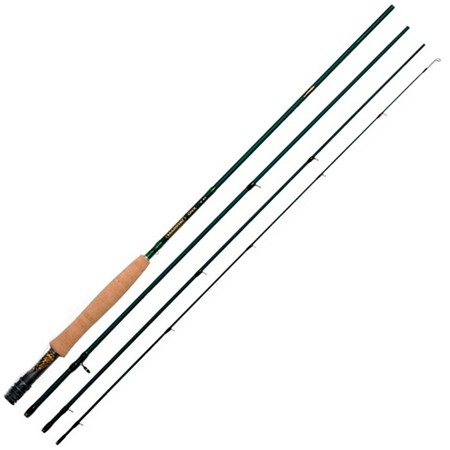
So this is a major innovation being proposed here: The "same rod" but in F version (from floating to S2) as well as in S version (from S3 to S7). One is able to present cleanly at long range and the other to shoot heavy lines with a larger tolerance range. With your two Marryat Tactical « Bombarde » you cover all situations.